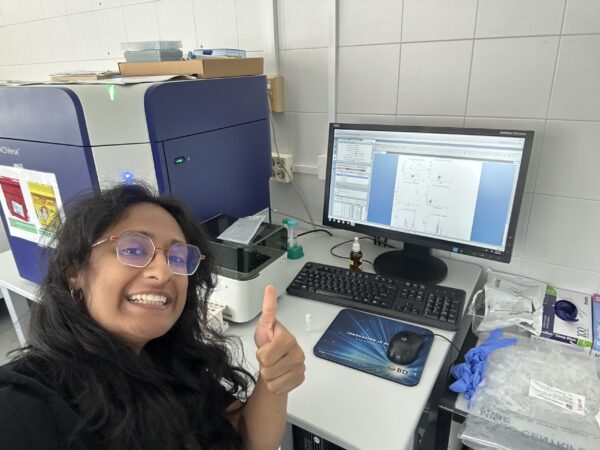
Sneha’s research stay in Malaga
To process the samples from Kongsfjorden, Sneha is learning how to use the flow cytometer. This work will provide a clear understanding of plankton composition in each season.
To process the samples from Kongsfjorden, Sneha is learning how to use the flow cytometer. This work will provide a clear understanding of plankton composition in each season.
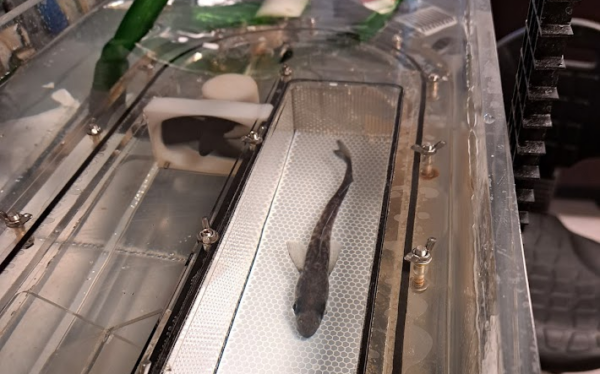
On Svalbard, Max measured oxygen consumption of Polar cod during rest and exercise. Now she is working to determine whether her field observations will be confirmed by data analysis.
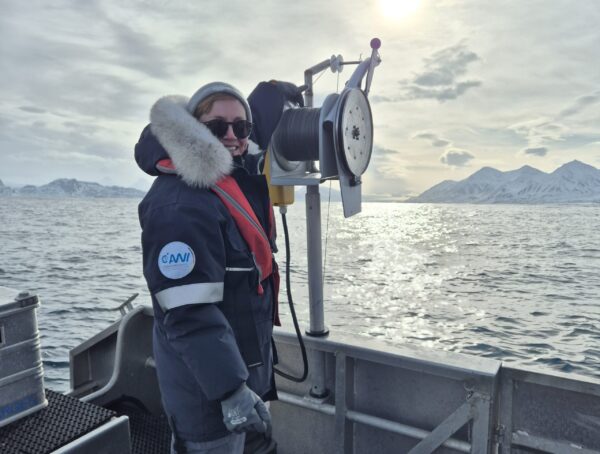
Clara Hoppe is back in Ny-Ålesund this spring to conduct her annual spring bloom monitoring in the Kongsfjord, which is experiencing warm temperatures.

A publication on year-round sampling in Kongsfjorden featuring YESSS and contributing our scientists as co-authors.

At the conference, Klara presented our early eDNA results and met with colleagues from our sister project GreenHAB

As part of a cycle of lectures organized by the NWV in the winter semester 25/26, Milan presented his experience working on Svalbard
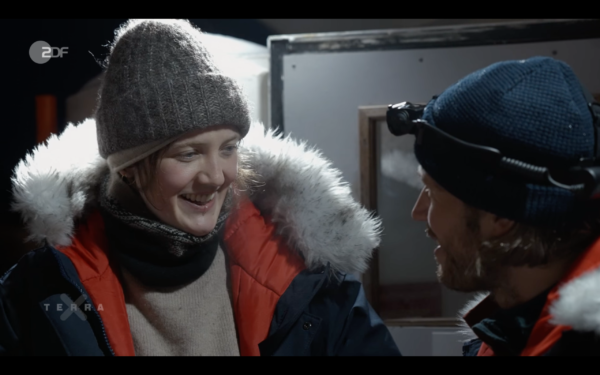
The two-part ZDF documentary is an extensive reflection on Arctic research. A special focus on YESSS is made in the second part of the film.
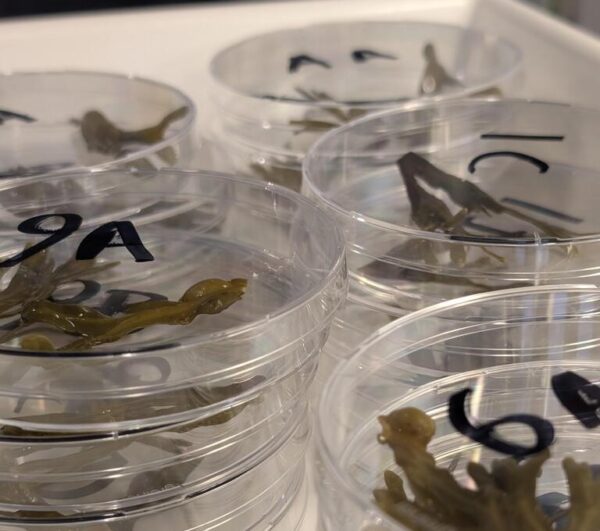
Milan spent two weeks at the University of Tromsø in order to conduct an overwintering experiment similar in design to the one he already did in Ny-Ålesund. For this experiment he is gathering 𝘍𝘶𝘤𝘶𝘴 𝘷𝘦𝘴𝘪𝘤𝘶𝘭𝘰𝘴𝘶𝘴 instead.

On October 30th, 2025, a virtual workshop to gather input and contribute to building a network on environmental issues took place.

Our PhD student Max tells about what our Polar cod eat and how they live in the aquariums, and how this translates to the Arctic ecosystem